333 Casino Payments in the UK: Deposits, Methods and Limits
 Available in GB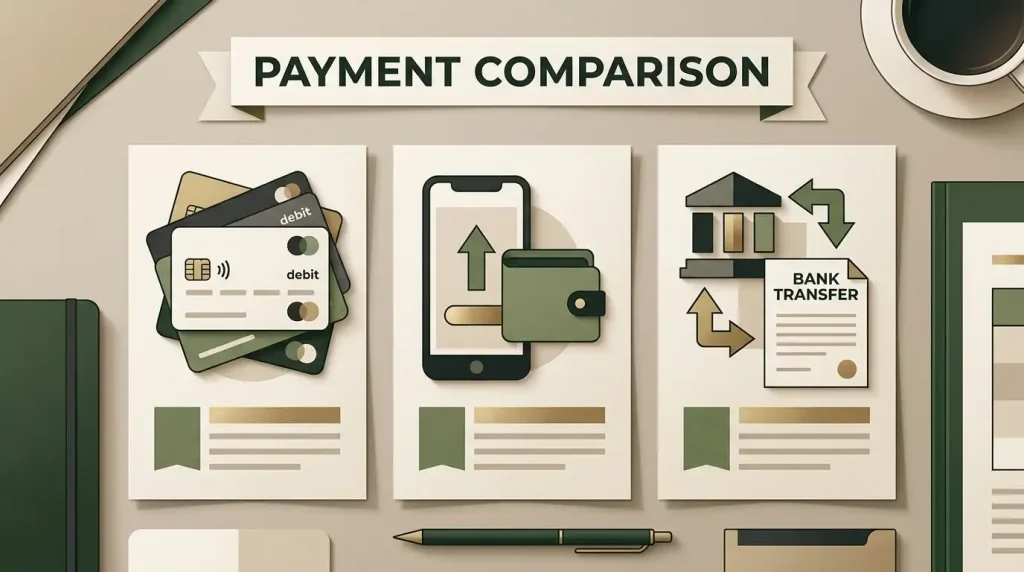
UK casino guide
333 Casino UK Guide
Updated 15 September 2026
Visa, Mastercard, PayPal and Trustly are repeatedly reported as 333 Casino payment methods in the available information, but the current cashier itself is not verified as continuously available. That distinction matters: a method can be historically associated with the brand without being usable today. For Great Britain, one payment rule is clear regardless of the casino – licensed online casinos cannot accept credit cards for gambling.
Table of Contents
- Reported 333 Casino deposit methods
- Credit cards are not a valid GB gambling route
- Minimum deposits, fees and limits need current cashier evidence
- Choosing a method as a UK player
- Related 333 Casino checks
- What a compliant 333 Casino cashier should show UK players
- A practical payment-method check before depositing
- 333 Casino Payments in the UK: Deposits, Methods and Limits
Reported 333 Casino deposit methods
Across the available information, Visa, Mastercard, PayPal and Trustly recur most consistently. Those methods are therefore reasonable product-history facts, but they should not be shown as a guaranteed live cashier menu while current operational status is disputed.
When the site is reachable, the cashier should be treated as the source of truth for your account. Method availability can depend on account status, verification, location and the platform configuration in use at the time.
Credit cards are not a valid GB gambling route
The Gambling Commission introduced a ban on gambling with credit cards in April 2020. For a Great Britain-facing casino, that means a card option must not be interpreted as permission to gamble on credit. Debit-card use is a separate category.
The same principle applies to digital wallets. The regulatory framework is designed to prevent a wallet funded by a credit card from becoming an indirect way around the ban. That is why a payment comparison should focus on the actual funding source, not only the logo displayed at checkout.
Minimum deposits, fees and limits need current cashier evidence
The available information found inconsistent and freshness-sensitive commercial details. This page therefore does not lock in an exact minimum deposit, deposit fee, withdrawal limit or withdrawal fee. Those are account-level or terms-level details that can change, especially for withdrawals.
If the cashier is live, check the amount field, any displayed minimum and maximum, the fee line, and the withdrawal availability of the same method before sending money. A deposit method is more useful when it also supports a practical cashout route.
Choosing a method as a UK player
For many UK players the useful comparison is speed of funding, ease of verification, control over spending and whether the same method can receive withdrawals. PayPal and bank-style payments can be convenient, while debit cards remain familiar, but the right choice depends on what the live cashier offers to the specific account.
Do not choose a method purely because an old review calls it instant. Deposit arrival and withdrawal settlement are different processes, and cashout timing belongs on the dedicated withdrawal page.
Related 333 Casino checks
Use the connected guides below to separate this page’s topic from other decisions that need their own evidence.
Decision check
What a compliant 333 Casino cashier should show UK players
A useful live cashier should make available methods, funding source, any limits or fees, and withdrawal eligibility clear before money is committed. It should not offer credit-card gambling to Great Britain customers. Until the current 333 Casino service state is confirmed directly, the reported method list is best used as a recheck checklist rather than a promise.
A practical payment-method check before depositing
The most reliable way to use this page is to separate durable information from details that can change with the live service. Start with the facts already explained above, then verify the parts that depend on the current interface before acting. This avoids turning an old screenshot, listing or review statement into a promise about what you will see today. It also keeps the decision practical: you are checking the feature that matters to you rather than trying to prove that every historical description is still correct.
Use the live site as a confirmation step, not as a reason to ignore the context on this page. The page explains what deserves attention and why, while the current interface shows what is actually available to your account at that moment. If the two differ, record the difference and make the decision from the current condition. Do not fill gaps with assumptions. A missing menu item, changed label or unavailable option can have several explanations, and the page should not assume one when the evidence only shows that the live experience has changed.
Before committing money, write down the two or three conditions that would change your decision. That might be the availability of a particular function, a clearly stated term, a usable payment route or an account requirement you can complete. Then check those conditions directly. This is more useful than scanning a long list of features because it connects the information to your actual use case. It also makes changes easier to handle: if one condition is no longer met, you know exactly why the page no longer supports the same decision for you.
Keep records only where they help. If a term, account message or transaction detail is important to your decision, saving the relevant confirmation can make later questions easier to resolve. Avoid collecting unnecessary personal data or relying on screenshots as universal proof for other users. The point is to preserve the context of your own action. When a current page provides clearer or newer information than an older saved reference, use the current authenticated information for the next step and retain the older material only as context.
Finally, assess clarity as part of the feature itself. A service can technically provide an option while explaining it poorly. If you cannot determine what happens next, what conditions apply or where to find the relevant control, seek clarification before proceeding. A good decision does not require guessing. This page is strongest when it helps you identify the right questions, distinguish stable evidence from changing details and verify the few facts that matter immediately before you use the service.
For a practical payment-method check before depositing, consistency matters more than a single positive or negative impression. Work through the same checks in the same order each time you revisit the service. That makes changes easier to spot and reduces the chance that a prominent headline distracts from a condition that matters more to your use. When the page above distinguishes confirmed information from items that need a current check, keep that distinction intact. It is better to leave a changing detail open for verification than to replace uncertainty with a precise figure or promise that the information shown does not support.
Another useful habit for a practical payment-method check before depositing is to separate what you can observe from what you are inferring. You can observe whether a control is present, whether a term is displayed or whether a page loads for you. You usually cannot determine the reason for a change from that observation alone. Keeping those two levels separate prevents the page from overreaching. If support provides an explanation, compare it with the account or terms information you can access and keep the wording tied to what was actually communicated rather than expanding it into a broader claim.
This approach also helps when comparing a practical payment-method check before depositing with another service. Compare like with like: current information with current information, and general policy with general policy. Do not compare a live figure from one site with an old promotional statement from another. If a detail cannot be verified on the same basis, mark it as unresolved rather than forcing a winner. The result is a slower but more dependable comparison that remains useful after cosmetic design changes or routine updates to the website.
If something important about a practical payment-method check before depositing is unclear, stop at the decision point that depends on it. You do not need every question on the page answered before using the site, but you do need the questions that affect your money, access or expectations answered clearly enough for the action you are about to take. That keeps the check proportional. Minor interface differences can be noted without becoming major warnings, while missing information that directly affects the next step deserves a current check before proceeding.
A useful final discipline is to revisit the relevant page immediately before the action that depends on it. Website content, account screens and commercial details can change independently, so a check made earlier should not automatically be carried forward to a later deposit, withdrawal or account decision. Read the current wording in full, make sure it applies to your situation and avoid treating the absence of a warning as proof of a favourable condition. If the information is still unclear, use the available support route to ask a narrow question and keep the answer connected to that specific issue. This creates a cleaner decision trail and avoids the common problem of combining fragments from different dates into one apparently precise but unsupported conclusion. The purpose of the extra check is not to make the process complicated; it is to ensure that the detail you are relying on is still the detail the live service presents when you are ready to act.